
Why the format of an “educational retreat”?
We get a lot of questions like this, often because to some, it sounds almost like a misnomer. How does one “learn” on “retreat”?
Since 2021, we’ve been building our programs around learning environments that support the well-being of our learners. It’s something I’m passionate about, as it would have felt disingenuous to teach well-being in an environment that wasn’t itself conducive to well-being.
Whole Hearted Medicine has been refining this model, and has been the leading provider of Continuing Professional Development (CPD) accredited wellbeing and leadership education for Doctors. Over the last six years we have led the way in allowing formal wellbeing education to be recognised by the various specialty colleges and CPD homes, and we’ve just run our 31st retreat, with nearly 450 doctors have now come through our programs.
What are Educational Retreats?
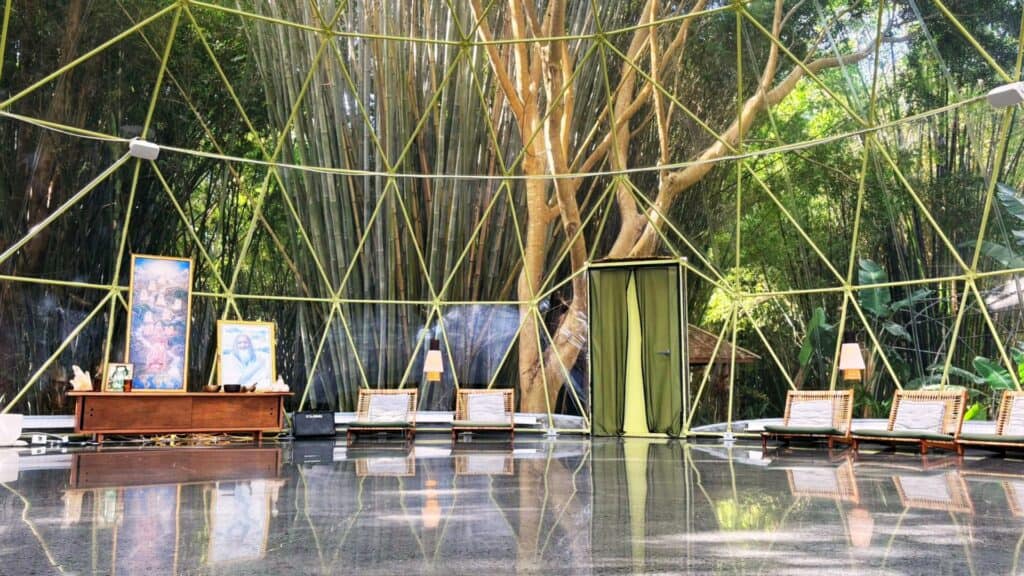
What sets an educational retreat apart from a conference or a workshop is the idea of a cocoon of learning. The environment, the structure, the shared meals, the conversation at the table between sessions- all of it is part of the curriculum, in a way that simply isn’t possible when everyone is coming and going at different times, doing different things.
If you’ve never been on any kind of retreat, meditation or yoga or otherwise, the idea might feel a little foreign. What the structure is designed to do is remove the external demands for a few days: the question of what’s for dinner, the school pickup logistics, the work worry sitting in the background. In removing these demands, it creates the space to be more receptive to things that might be otherwise ethically a bit challenging, or a bit complex, or touch a little bit close to home in terms of the practice of self-reflection.
In fact, this space of going on retreat is an intentional space that the learner opens up. When we think about the science of coaching, being coachable and being intentional and having some buy-in is really important if we are going to achieve anything through that coaching process. So the fact that the learner has shown up intentionally protecting this time to be on the educational retreat actually forms the basis of the whole coaching model that comes over the following four days.
The cocoon is part of the pedagogy, and it’s exactly why we have exclusive use of all the venues that we use. No new faces coming and going in the middle, just us, as a group, for the length of our retreat.
Our Retreat Encounters
One question I find myself asking our doctors on retreat is: “What are you noticing at this point in our journey together?”
On Day 1, most people meet that question with a blank stare.
By Day 2, the noticing starts small. Tiredness. A thought that keeps circling. The quiet relief of not having to think about dinner.
By Day 3, people start noticing not just the sensation or the thought, but their own response to noticing it: “I’m noticing my body feels tired, and then I notice how much I judge myself for that.”
This is where true self-reflection begins to unfold; there’s a gradual de-fusion of each individual from the experience. We learn how to embody that persona of the compassionate observer that the practice of mindfulness is based on.
And by Day 4, what we often find is people are noticing that the mind is already projecting to home: to our worries, to rumination- and it’s met with the ability to actually notice that without judgment, just with a sense of open curiosity.
In just four days of highly supported work, the process of self-reflection shifts from a punitive act of self criticism, to a curious exploration of both the experience and the experiencer.
This educational retreat model is designed to cultivate and provoke mindfulness to emerge into the space of retreat, building a skill that can then be taken home and integrated into all parts of each doctors life. The skill of compassionate self reflection is the foundation for all other elements of reviewing performance (a critical component of the AHPRA CPD Standards), professional reflective practice and leadership development, and the ability to process the millions of interpersonal interactions that occur every day in the process of providing care to others.
In other words, this is the work that makes providing healthcare possible… and it doesn’t get nearly enough attention in any other learning environment or CPD program.
The Embodied Practitioner
To support others, it is imperative that each of us embed personal practices of support and care into our own lives.
Something that we explore in great depth on our educational retreats is how each of us can embody the teachings of wellbeing that we so readily impart to our patients. I’ve written before on how my training in yoga has shown me the importance of embodiment and creating systems and cultures that support each and every practitioner to support others from their own place of embodied wellbeing.
Our educational retreats are specifically designed to support this practice of embodied wellbeing. Where doctors can feel what it is like to be truly held, supported, and nurtured through the principles of Lifestyle Medicine in action- supportive sleep, mindful movement, nourishing meals, connection, stress management and avoiding harmful substances and practices. Encouraged to connect with their experience and to be a bit more curious about not just what’s going on for them, but what’s going on inside them in response to this.
Often our participants bring thoughts into the retreat they feel they need to ‘solve’ while they are with us- “I have no time to look after myself”, “the system will never change, so how can I change?”, or “there is too much that I need to do, I don’t even know where to start!”. Throughout the educational retreat they are offered the gentle encouragement to simply set these down, to notice them, to observe them from different angles and perspectives whilst they are with us. Then to check in again on the final day to see what is left and how it may look different after these days of intentional embodiment? Sometimes problems need to be felt their way through, not thought their way out of.
“A thinking mind cannot dismantle the thinking mind.”
That’s the space we aim to offer doctors on our educational retreats, somewhere they can rest where for once, they don’t need to immediately have all the answers. Which is often something that they have never encountered before.
Retreats are an educational space
For a profession trained so thoroughly in solving things, it can be genuinely disorienting to be offered a different premise: that the answer might not need to be worked out at all. That it might simply emerge, once there’s room for it to do so.
That is why we run our educational retreats, and that is why we keep challenging the status quo within medicine that can often be quick to dismiss that which cannot be easily quantified as irrelevant.
If you’d like to learn more about these very special educational offerings, or if you think Whole Hearted Medicine can help you to support you or your colleagues, then please reach out. I’d really love to hear from you.
With warmth, from one doctor to another,
Emily
If this is the kind of space you’ve been needing, you can find out more about our Mindfulness and Wellbeing retreats here.